



ភ្ជាប់​ទៅ​គេហទំព័រ​ទាក់ទង

ព័ត៌មាន​​ថ្មី

Hong Kong Protesters, Pro-China Residents Scuffle

Anti-Occupy Central protesters stand behind a police cordon on Nathan Road at Hong Kong's Mongkok shopping district, demanding the tents set up by pro-democracy protesters to be demolished, Oct. 3, 2014.
1/15 Anti-Occupy Central protesters stand behind a police cordon on Nathan Road at Hong Kong's Mongkok shopping district, demanding the tents set up by pro-democracy protesters to be demolished, Oct. 3, 2014.
A pro-democracy protester, center, bleeds in the month as he is escorted by the police after being beaten by anti-Occupy Central protesters at Hong Kong's shopping Mongkok district, where a main road is occupied, Oct. 3, 2014.
2/15 A pro-democracy protester, center, bleeds in the month as he is escorted by the police after being beaten by anti-Occupy Central protesters at Hong Kong's shopping Mongkok district, where a main road is occupied, Oct. 3, 2014.
A pro-democracy protester, left, argues with an anti-Occupy Central protester, not shown, while being kicked by another anti-Occupy Central protester, right, at Hong Kong's shopping Mongkok district, where a main road is occupied, Oct. 3, 2014.
3/15 A pro-democracy protester, left, argues with an anti-Occupy Central protester, not shown, while being kicked by another anti-Occupy Central protester, right, at Hong Kong's shopping Mongkok district, where a main road is occupied, Oct. 3, 2014.
A pro-democracy protester is taken away by police officers as an ambulance tries to leave the compound of the chief executive office in Hong Kong, Oct. 3, 2014.
4/15 A pro-democracy protester is taken away by police officers as an ambulance tries to leave the compound of the chief executive office in Hong Kong, Oct. 3, 2014.
A pro-democracy activist raises her hands to indicate her agreement to leave their protest area as local police hold back residents and pro-Beijing supporters in Kowloon's crowded Mong Kok district, Hong Kong, Oct. 3, 2014.
5/15 A pro-democracy activist raises her hands to indicate her agreement to leave their protest area as local police hold back residents and pro-Beijing supporters in Kowloon's crowded Mong Kok district, Hong Kong, Oct. 3, 2014.
A local policeman scuffles with residents and pro-Beijing supporters as they try to attack a student pro-democracy activist in Mong Kok district, Oct. 3, 2014.
6/15 A local policeman scuffles with residents and pro-Beijing supporters as they try to attack a student pro-democracy activist in Mong Kok district, Oct. 3, 2014.
Residents and pro-Beijing supporters tear down a pro-democracy activist tent in Mong Kok district, Oct. 3, 2014.
7/15 Residents and pro-Beijing supporters tear down a pro-democracy activist tent in Mong Kok district, Oct. 3, 2014.
A pro-Beijing supporter shouts at pro-democracy activists in Mong Kok district, Oct. 3, 2014.
8/15 A pro-Beijing supporter shouts at pro-democracy activists in Mong Kok district, Oct. 3, 2014.
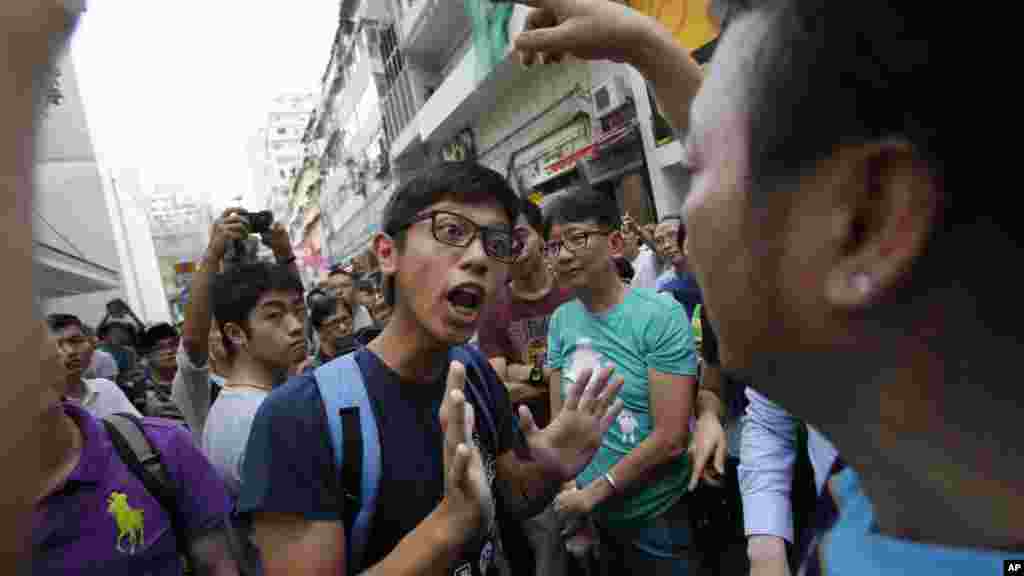
A pro-democracy student protester tries to negotiate with angry locals trying to remove the barricades blocking streets in Causeway Bay, Hong Kong, Oct. 3, 2014.
9/15 A pro-democracy student protester tries to negotiate with angry locals trying to remove the barricades blocking streets in Causeway Bay, Hong Kong, Oct. 3, 2014.
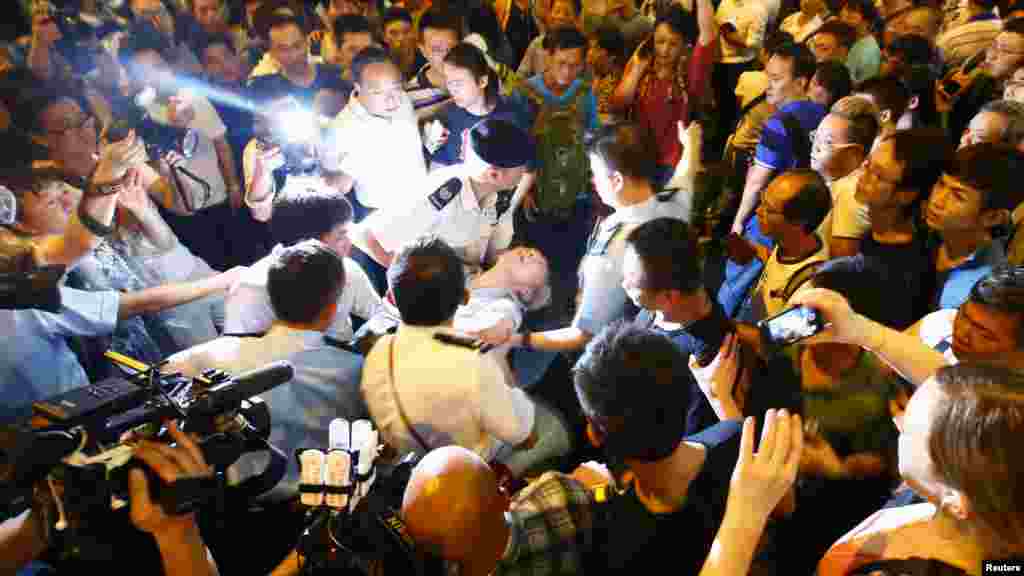
Police remove a man who collapsed during confrontations between anti-Occupy Central protesters and pro-democracy protesters on a main street at Hong Kong's Mongkok shopping district, Oct. 3, 2014.
10/15 Police remove a man who collapsed during confrontations between anti-Occupy Central protesters and pro-democracy protesters on a main street at Hong Kong's Mongkok shopping district, Oct. 3, 2014.
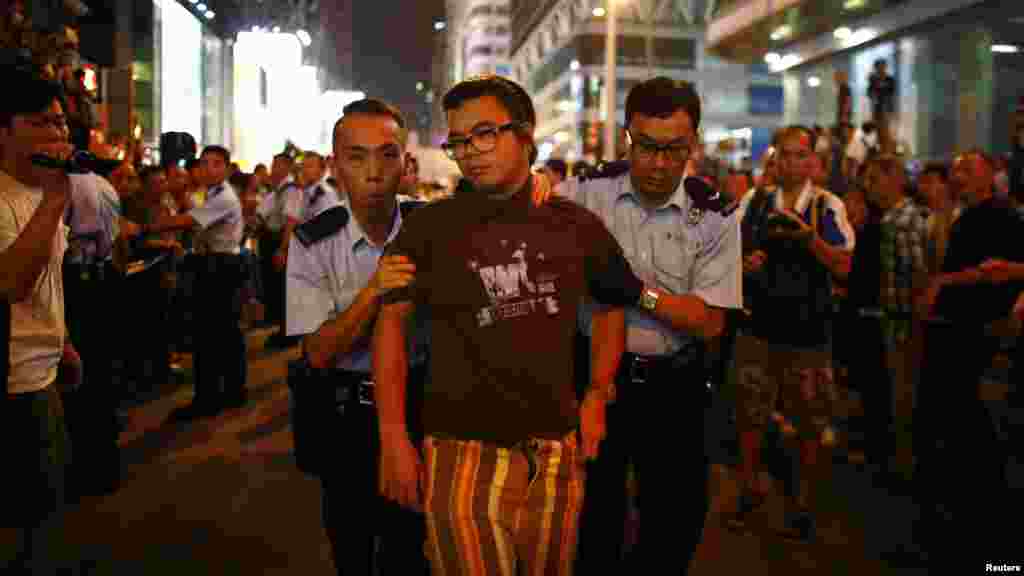
Police remove a pro-democracy protester from the area during confrontations between anti-Occupy Central protesters and pro-democracy protesters on a main street at Hong Kong's Mongkok shopping district, Oct. 3, 2014.
11/15 Police remove a pro-democracy protester from the area during confrontations between anti-Occupy Central protesters and pro-democracy protesters on a main street at Hong Kong's Mongkok shopping district, Oct. 3, 2014.
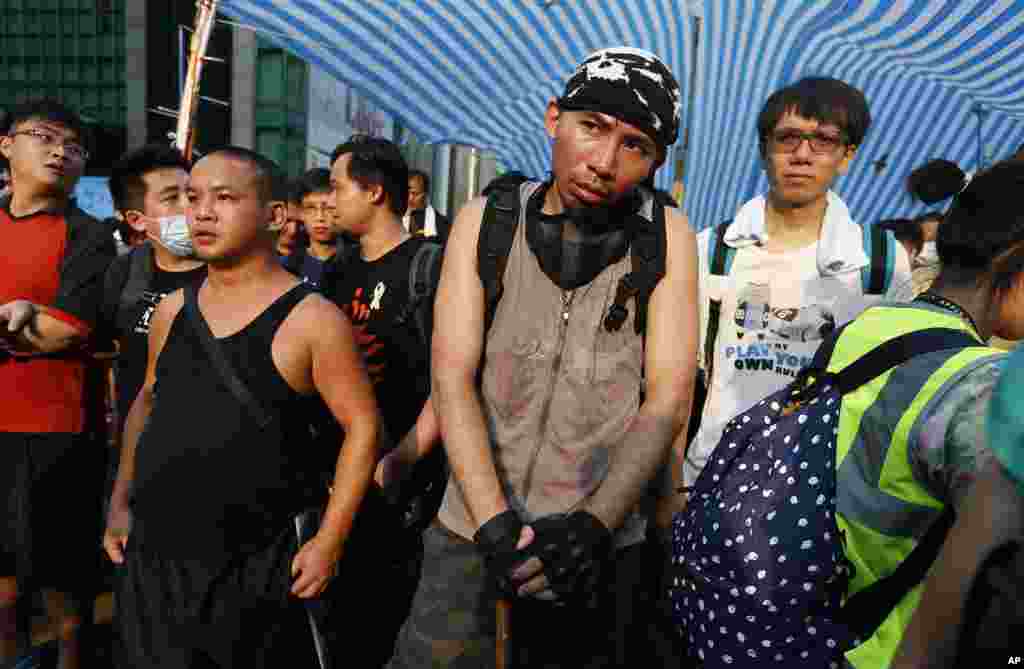
Pro-democracy activists surround and protect their tent as residents and pro-Beijing supporters threaten to tear it down in Mong Kok district, Oct. 3, 2014.
12/15 Pro-democracy activists surround and protect their tent as residents and pro-Beijing supporters threaten to tear it down in Mong Kok district, Oct. 3, 2014.
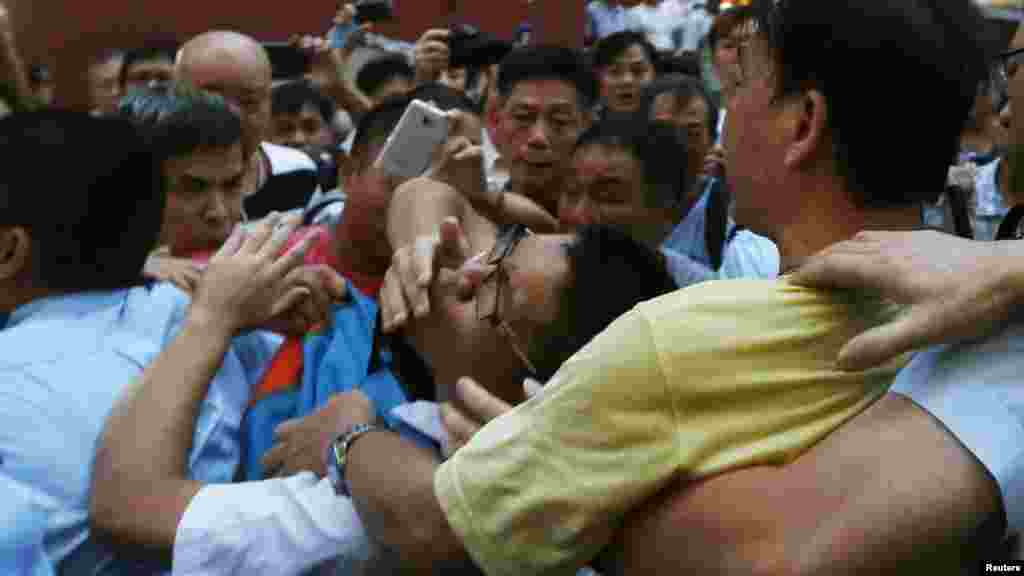
A pro-democracy protester, center, is grabbed by an anti-Occupy Central protester, right, at Hong Kong's shopping Mongkok district, where a main road is occupied, Oct. 3, 2014.
13/15 A pro-democracy protester, center, is grabbed by an anti-Occupy Central protester, right, at Hong Kong's shopping Mongkok district, where a main road is occupied, Oct. 3, 2014.
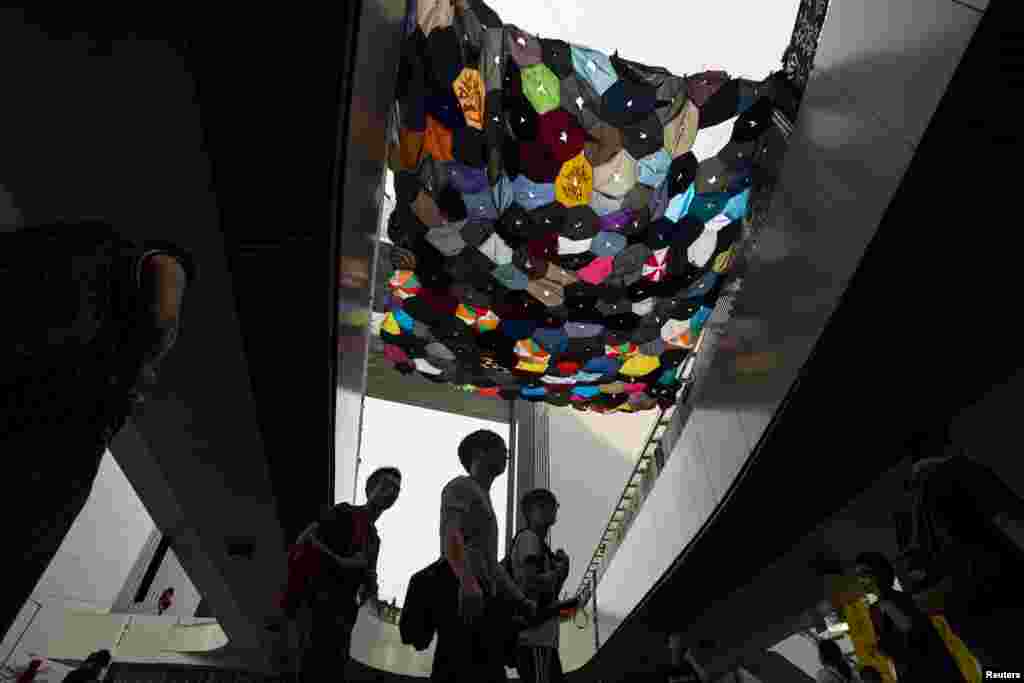
Protesters walk under an art installation made from umbrellas by a local artist outside the government headquarters in Hong Kong, Oct. 3, 2014.
14/15 Protesters walk under an art installation made from umbrellas by a local artist outside the government headquarters in Hong Kong, Oct. 3, 2014.
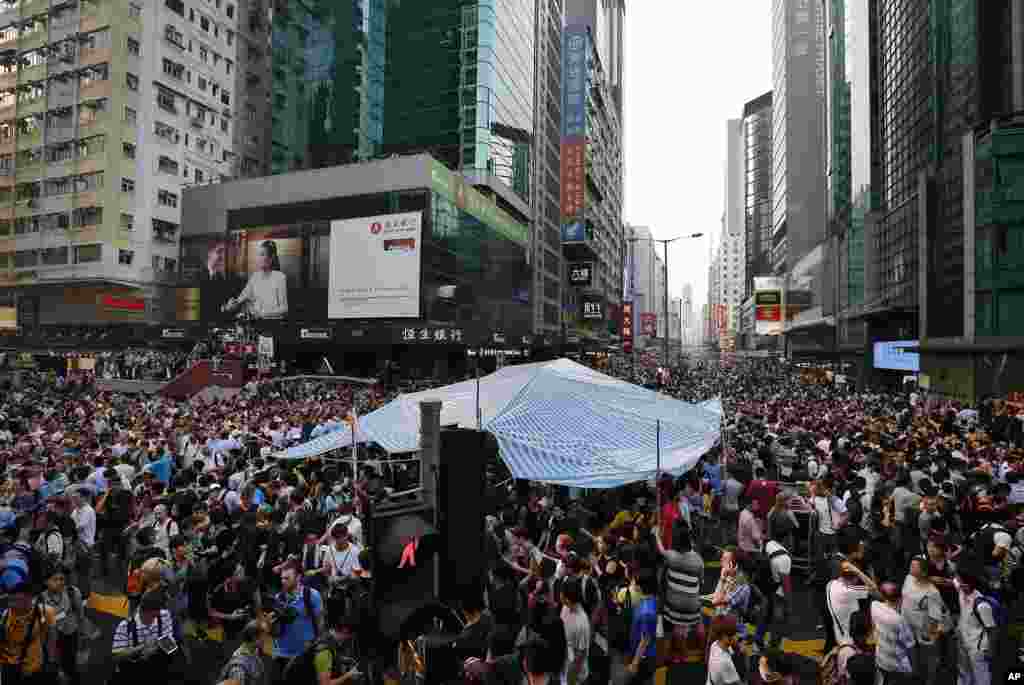
Residents and pro-Beijing supporters surround a pro-democracy activist tent in Mong Kok district, Oct. 3, 2014.
15/15 Residents and pro-Beijing supporters surround a pro-democracy activist tent in Mong Kok district, Oct. 3, 2014.
Previous slide
Next slide

Hong Kong police were forced to intervene Friday after street fights broke out between pro-democracy demonstrators and frustrated residents who oppose the week-long protests.

Williams Q&A with Brian Padden on Hong Kong Protesters Clash
សូម​រង់ចាំ

No media source currently available

0:00 0:04:17 0:00
ទាញ​យក​ពី​តំណភ្ជាប់​ដើម

In Mong Kok, one of Hong Kong's most famous and congested shopping districts, hundreds of supporters of Chinese rule on Friday stormed tents and ripped down banners belonging to pro-democracy protesters, forcing many to retreat.

Police formed a human chain in an attempt to separate the two groups. When the barrier did not hold, more police were sent in as reinforcements.

No serious injuries were reported.

Hong Kong pro-democracy protest leaders are calling these "organized" attacks and have threatened to call off talks with government to end the demonstrations if action is not taken to protect the protesters.

Talks being organized

Hong Kong's top civil servant, Chief Secretary Carrie Lam, told The Associated Press on Friday she had begun organizing the talks with the protesters, who have continued their sit-ins after Leung rejected their calls to resign.

"I am indeed very concerned about the clashes we have seen in the streets," Lam said. "Sentiments are running high and there is a high chance of conflict on the streets.

"So I am urging protesters who have been occupying parts of the territory to consider retreating ... so that the police can restore law and order," she said.

The pro-democracy protesters - mainly students - accused the Beijing supporters of coming to the area to cause trouble.

It was unclear if the mob of people in their 30s and older trying to drive away the mostly younger protesters were an organized group. But at least some were local residents fed up with the inconvenience of blocked streets and closed shops. Stern orders by the police to stop blocking the way may have encouraged them to act on their own.

Benny Tai, leader of the broader pro-democracy movement Occupy Central With Love and Peace urged protesters to shift back to the Admiralty area, near the government headquarters, where they began their protests last weekend, for safety's sake.

Tens of thousands of protesters have taken to Hong Kong's streets in the past week to demand full democracy in the former British colony, including a free voting system when they come to choose a new leader in 2017.

The unrest followed heavy rainstorms on Friday that had reduced the number of pro-democracy protesters to just several dozen. Many protesters had also returned to work following a two-day holiday.

Dwindling numbers

Many activists worry authorities will take advantage of the dwindling numbers to clear the protest sites, which have been occupied with tens of thousands of people since last Friday.

Hong Kong leader Leung Chun-ying offered a concession by agreeing to open talks with pro-democracy protesters but refused to stand down. But Beijing restated its resolute opposition to the protests and a completely free vote in Hong Kong.

Beijing, facing separatist unrest in far-flung and resource-rich Tibet and Xinjiang, is unlikely to give way in Hong Kong, fearful that calls for democracy there, especially if successful, will spread to the mainland.

And Financial Secretary John Tsang warned that sustained protests in the city's Central financial center could create “permanent” damage to the Asian financial hub.

China's Communist Party has declared the protests to be illegal and in a state media editorial on Friday warned the campaign of civil disobedience is "doomed to fail."

The front-page editorial in the party-run People's Daily, which generally reflects the central government's views, said there is "no room for concessions" on greater democratic reforms.

The editorial was published after Leung ignored a midnight Thursday deadline to step down, instead proposing talks with a top official on resolving the political crisis.

Cautious of talks

Many protest leaders, including those with the prominent Occupy Central group, have cautiously welcomed the proposed talks, though it is not clear when they will take place.

A possible escalation by the protesters was averted late Thursday when protesters failed to follow through on their threats to occupy government buildings if Leung did not resign. Police had warned they would respond firmly to such a move.

Earlier Friday, some demonstrators held umbrellas for police in the rain while Beijing supporters shouted at police for failing to clear the demonstrators.

“We are all fed up and our lives are affected,” said teacher Victor Ma, 42. “You don't hold Hong Kong citizens hostage because it's not going to work. That's why the crowd is very angry here.”

The protests have been an amalgam of students, activists from the Occupy movement and ordinary Hong Kongers. They have come together under the banner of “Umbrella Revolution,” so called because many of them used umbrellas to ward off pepper spray used by police on Sunday.

The Occupy movement presents one of the biggest political challenges for Beijing since it violently crushed pro-democracy protests in and around Tiananmen Square in 1989.

Brian Padden contributed to this report from Mong Kok. Some material for this report came from Reuters and AP.

XS
SM
MD
LG