





The deadline issued by student pro-democracy protesters in Hong Kong for the territory's chief executive to resign is approaching, but officials have shown no sign of giving in.
The protesters have threatened to take over several government buildings if Beijing-friendly Chief Executive Leung Chun-ying fails to step down by midnight local time (1600 GMT). They are also demanding China introduce full democracy so the city can freely choose its own leader.
Taking over government buildings would mark a major escalation in the protests, and police are warning of "serious consequences" if the demonstrators try to do so.
Officers ready
Police spokesman Steve Hui said authorities will not tolerate any illegal surrounding of government buildings, including law enforcement agencies, and urged protesters to stay "calm and restrained."
Hui said such actions will obstruct officers from carrying out their duties.
The student protesters have been camping outside Leung's office in the semi-autonomous Chinese city.
Leung has shown no signs he intends to step down, refusing to even meet with the protesters.
The Hong Kong government also urged the protesters on Thursday to end their blockade of the city center immediately, saying their actions were affecting public order and the provision of public services.
“About 3,000 government officials will try their best tomorrow to return to work as [much] as possible. To maintain public service, the government headquarters must operate as usual,” the government said in a statement. “We urge the Occupy Central leaders and organizers to stop the movement immediately.”
Keep up pressure
Mio Chang, president of the Hong Kong Baptist University Students Union, said: "It's what we are planning is, to keep the pressure to the government and it's a necessary thing during this process.”
Protests Continue in Hong Kong – Thursday, Oct. 2


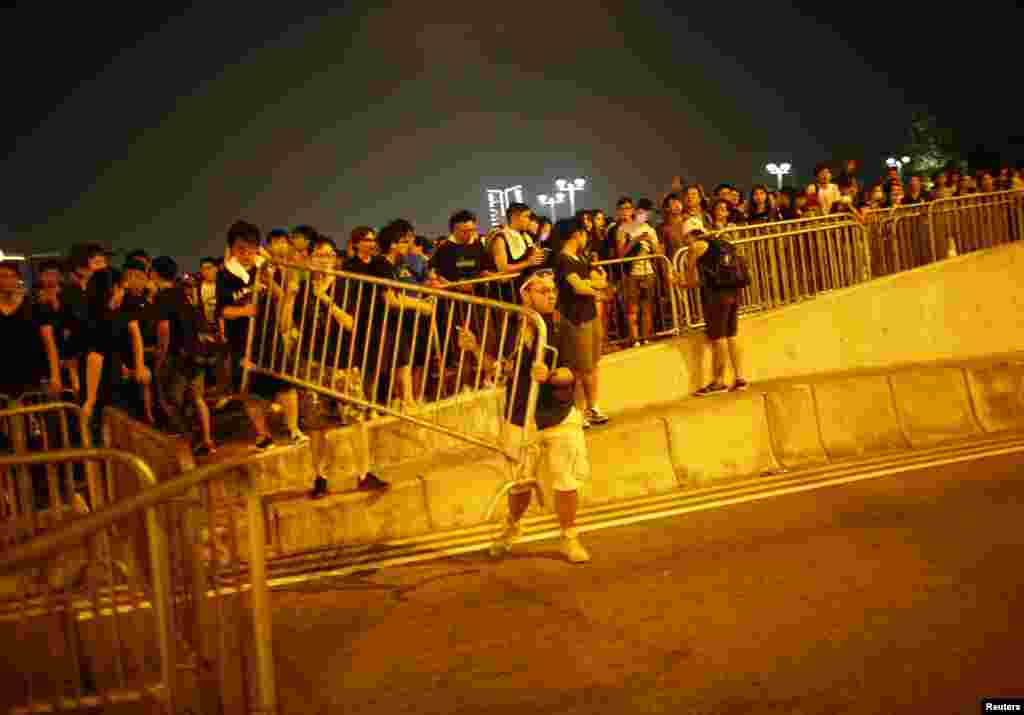


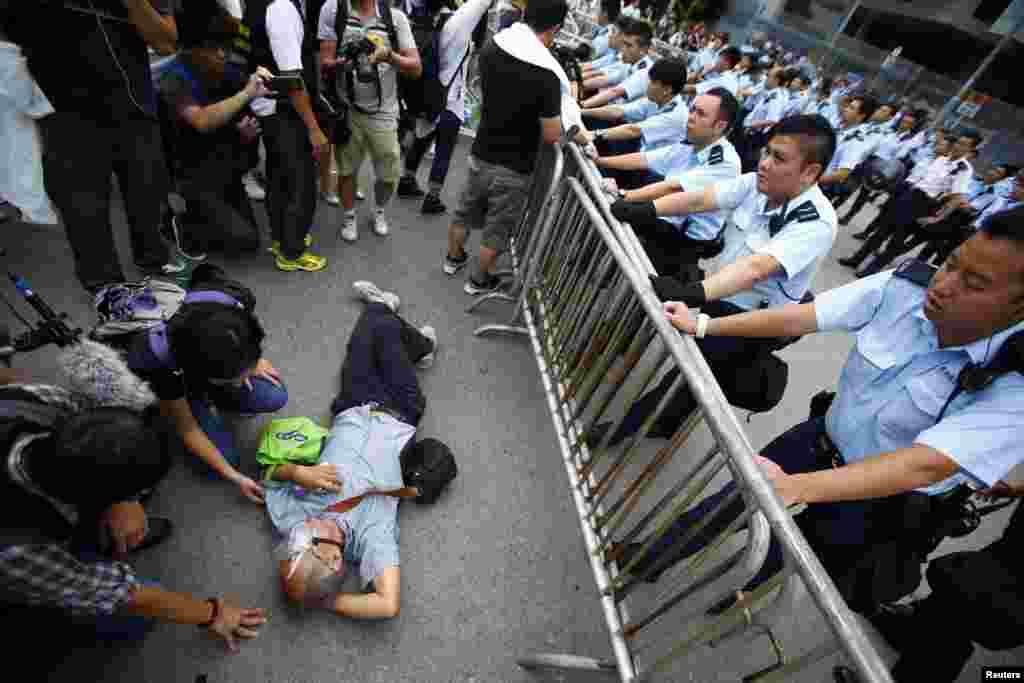


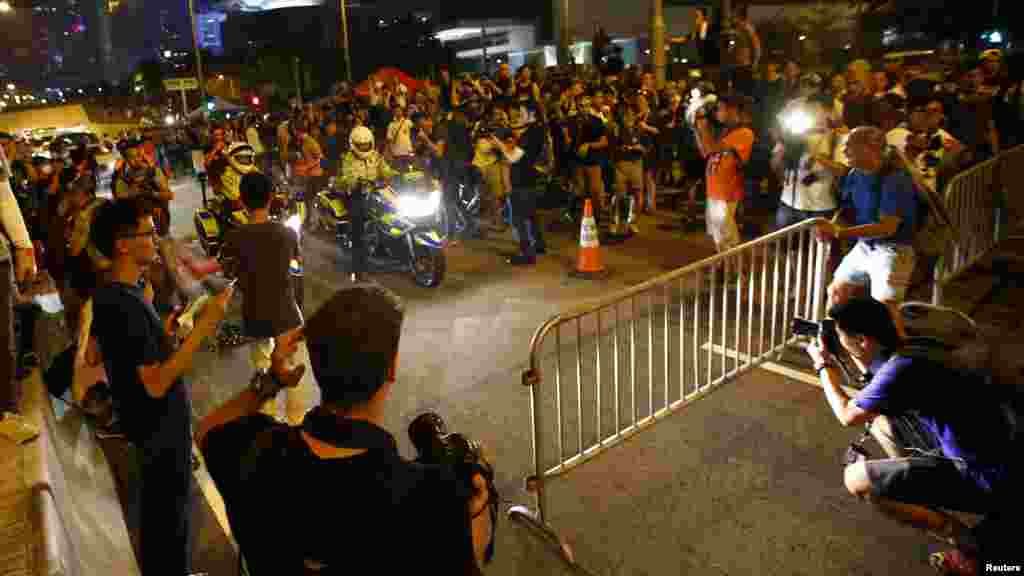
The Communist Party on Thursday signaled it is not ready to compromise. A front-page editorial in the People's Daily, a party mouthpiece, expressed confidence in the embattled Leung.
The editorial said the protests violated Hong Kong's law, blocked traffic, disrupted social order, and hurt peace and prosperity. It added that Beijing firmly supports the handling of the protests by Hong Kong police.
Police on Sunday used tear gas and pepper spray in a failed attempt to disperse the protest camps. But police have since pulled back, allowing the protests to continue.
There are reports that Leung is reluctant to use further force against the demonstrators, and that he will instead attempt to wait out the protests in hopes they subside or lose public support, and will only intervene if there is looting or violence, said a government source with ties to Leung.
Fewer protesters
Meanwhile, protesters across the city have dug in, setting up supply stations with water bottles, fruit, disposable raincoats, towels, goggles, face masks and tents. Even so, some in the crowds wondered how long the status quo could last.
"I don't think we can stay like this for more than two weeks," said Moses Ng, a 26-year-old who works in sales and marketing, gesturing toward young people milling around barricaded streets in Causeway Bay, a major shopping district. "(If so) this action would have totally failed, so we are thinking about what else we can do."
Others, like 17-year-old secondary school pupil Wong Chi Min, were more defiant. "People will keep coming back every day," he said. "We will wait for CY (Leung) to step down so we can choose our own leader. If he doesn't, we will continue to wait here."
Still, in the city center at mid-day Thursday, crowds were sparse compared to the day before.
Supporters said the numbers would increase as the day progressed.
Like other protesters, Ruby Yeung showed her support by posting messages on a wall. “We support the real democracy and we defend freedom of speech and we support Hong Kong," Yeung said she wrote.
Some Hong Kong residents who are not participating in the protests see the movement as democracy in action. Cassie Leung, a 16-year-old student, came with her family.
“This is a really good practice for me to learn what is happening in Hong Kong and this has successfully aroused my social awareness and not only on democracy movements like Occupy Central but probably other social movements," Cassie Leung said.
China reaction
In Washington, Chinese Foreign Minister Wang Yi slammed the protests as illegal and warned the U.S. and others to not interfere with China's internal affairs.
Wang's comments came after meeting U.S. Secretary of State John Kerry, who said he has "high hopes that Hong Kong authorities will exercise restraint and respect protesters' rights to express their views."
U.S. President Barack Obama also participated in the meeting, where he underscored U.S. hopes for a peaceful resolution of the Hong Kong standoff.
A White House statement said the Obama administration is closely following events in Hong Kong.
It also noted consistent U.S. support for the "open system" of governance in the city necessary to maintain its "stability and prosperity."
Obama opens a three-day visit to Beijing on November 10.
The protests mark the worst unrest in Hong Kong since Beijing took control of the one-time British colony in 1997.
Brian Padden contributed to this article from Hong Kong. Material for this report came from Reuters.