



ភ្ជាប់​ទៅ​គេហទំព័រ​ទាក់ទង

ព័ត៌មាន​​ថ្មី

New US Spacecraft Splashes Down After Successful Test Mission

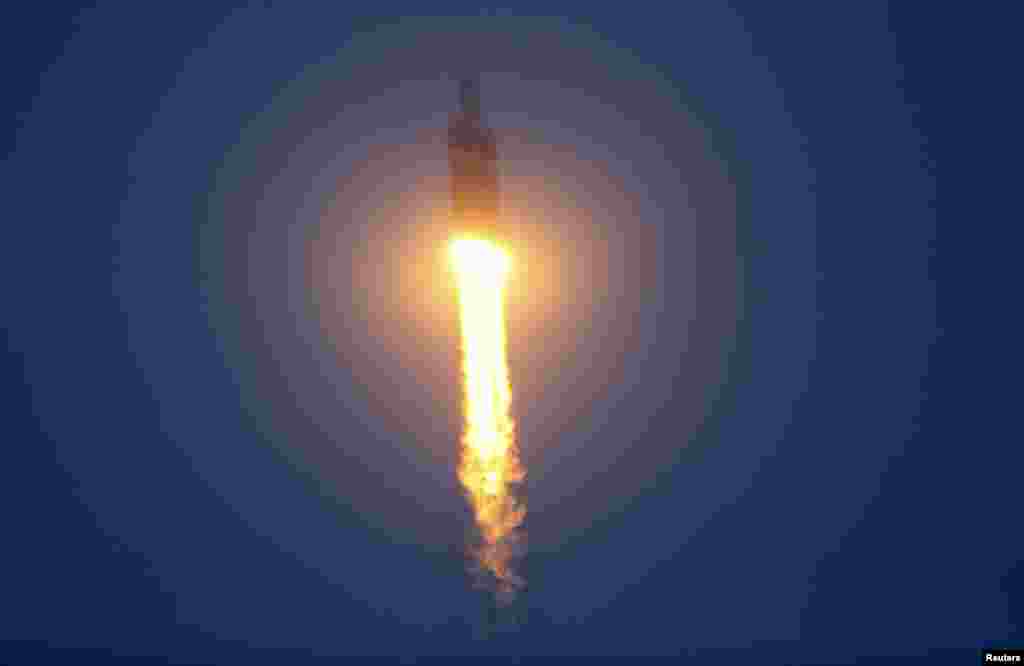
The Delta IV Heavy rocket with the Orion spacecraft lifts off from the Cape Canaveral Air Force Station in Cape Canaveral, Florida, Dec. 5, 2014.
1/8 The Delta IV Heavy rocket with the Orion spacecraft lifts off from the Cape Canaveral Air Force Station in Cape Canaveral, Florida, Dec. 5, 2014.
In this photo provided by NASA, the United Launch Alliance Delta 4-Heavy rocket, with NASA’s Orion spacecraft mounted atop, lifts off from the Cape Canaveral Air Force Station, Friday, Dec. 5, 2014.
2/8 In this photo provided by NASA, the United Launch Alliance Delta 4-Heavy rocket, with NASA’s Orion spacecraft mounted atop, lifts off from the Cape Canaveral Air Force Station, Friday, Dec. 5, 2014.
The Delta IV Heavy rocket with the Orion spacecraft lifts off from the Cape Canaveral Air Force Station, Dec. 5, 2014.
3/8 The Delta IV Heavy rocket with the Orion spacecraft lifts off from the Cape Canaveral Air Force Station, Dec. 5, 2014.
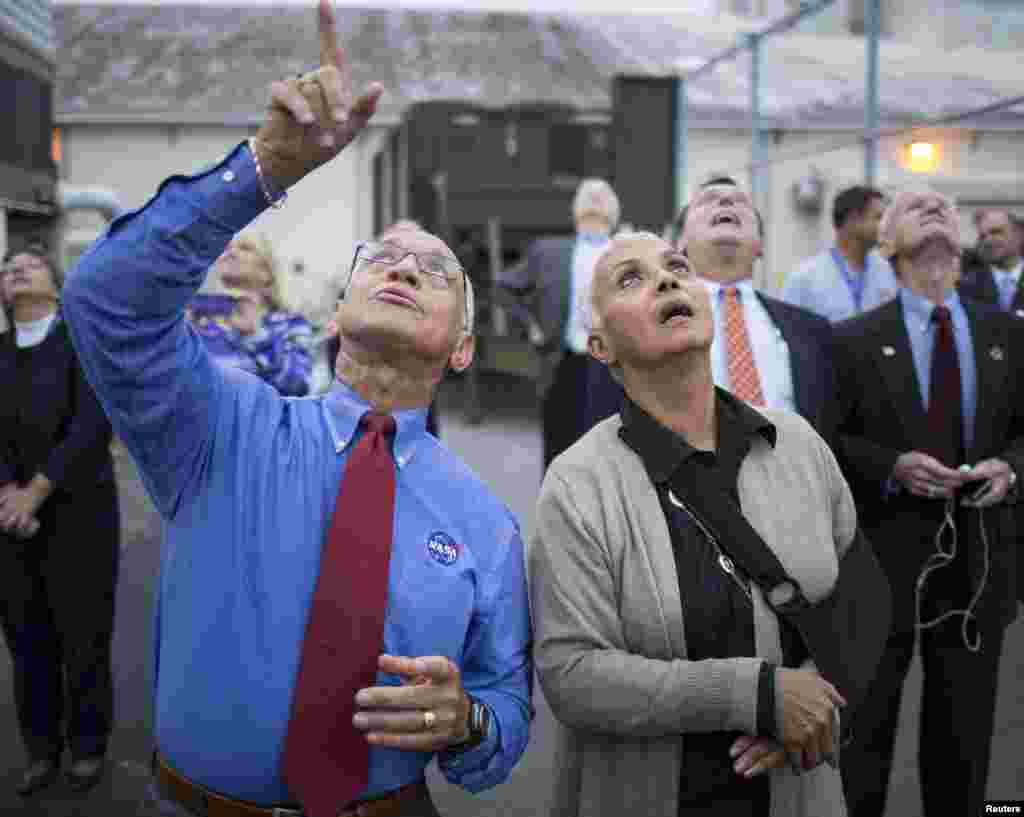
NASA Administrator Charles Bolden, left, and his wife Jackie watch as the Delta IV Heavy rocket with the Orion spacecraft lifts off from the Cape Canaveral, Dec. 5, 2014.
4/8 NASA Administrator Charles Bolden, left, and his wife Jackie watch as the Delta IV Heavy rocket with the Orion spacecraft lifts off from the Cape Canaveral, Dec. 5, 2014.
This photo provided by NASA-TV, shows the view from the Orion spacecraft atop a United Launch Alliance Delta 4-Heavy rocket as it climbs to orbit during the first test flight, Friday Dec. 5, 2014.
5/8 This photo provided by NASA-TV, shows the view from the Orion spacecraft atop a United Launch Alliance Delta 4-Heavy rocket as it climbs to orbit during the first test flight, Friday Dec. 5, 2014.
In this frame grab from NASA-TV, the Orion spacecraft descends before splashing down in the Pacific Ocean, Friday, Dec. 5, 2014.
6/8 In this frame grab from NASA-TV, the Orion spacecraft descends before splashing down in the Pacific Ocean, Friday, Dec. 5, 2014.
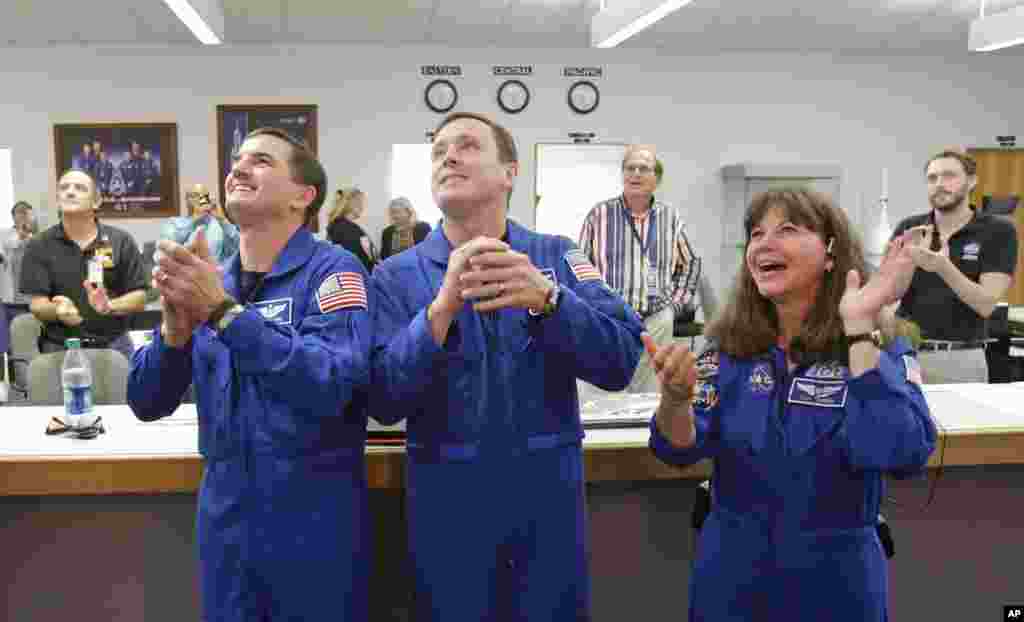
NASA astronauts, from left, Rex Walheim, Jack Fischer and Cady Coleman, cheer as they watch the landing of the Orion test flight on a television at the Press Site at the Kennedy Space Center, Friday, Dec. 5, 2014.
7/8 NASA astronauts, from left, Rex Walheim, Jack Fischer and Cady Coleman, cheer as they watch the landing of the Orion test flight on a television at the Press Site at the Kennedy Space Center, Friday, Dec. 5, 2014.
In this frame grab from NASA-TV, the Orion capsule floats after splashing down in the Pacific Ocean, Friday, Dec. 5, 2014.
8/8 In this frame grab from NASA-TV, the Orion capsule floats after splashing down in the Pacific Ocean, Friday, Dec. 5, 2014.
Previous slide
Next slide

A new spacecraft that is intended to take U.S. astronauts back to the moon and beyond has returned from its test flight, splashing down in the Pacific Ocean off the coast of Baja California.

The unmanned spacecraft made two orbits of the Earth at an altitude more than 14 times higher than the International Space Station. After its four-and-a-half hour flight, Orion re-entered Earth's atmosphere at a speed of 32,000 kilometers an hour, its descent slowed at the end by three red-and-white striped parachutes. NASA called the clear weather "perfect conditions for Orion's homecoming."

The Orion capsule was originally scheduled to lift off Thursday from the Cape Canaveral launch complex in Florida but a variety of problems led to a delay. They included a faulty rocket valve, wind speeds and a boat that wandered into a restricted zone off the coast.

The U.S. space agency NASA says the first manned mission aboard Orion will not happen until at least 2021. Once it is fully operational, Orion will carry anywhere from four to six astronauts on deep space missions to the moon, an asteroid and eventually Mars.

The space agency is also developing a new rocket, dubbed the Space Launch System, that will carry Orion.

Since the last space shuttle flight in 2011, U.S. astronauts have been transported to the ISS aboard Russia's Soyuz capsule. NASA has awarded contracts to two private companies, Boeing and Space X, to begin ferrying astronauts to the orbital outpost beginning in 2017.

XS
SM
MD
LG